


This is the third experiment (see the first and second) in a series where I’ll be using my ontological framework to stress-test thinkers from every corner of the political galaxy, even the ones I personally swear by.
The goal is to spot the exact moment a perfectly confident argument takes a wrong turn at the metaphysical off-ramp and ends up in a charming little subdivision called “Not Actually Reality.” We’re looking for those paradoxical glitches where the claims sound profound and logically airtight, yet the whole thing quietly detaches from the structure of existence, which is, of course, a minor detail.
This framework isn’t something I cooked up at 2am next to a cold slice of pizza. It’s a re-mapping of very old insights about how reality is organized—the kind Aristotle was already cataloging before indoor plumbing was cool, with philosophical guest appearances from Hannah Arendt and Plato, who both spent a great deal of time pointing out that we humans are extremely talented at mistaking our own projections for the universe—prompting Pluto to file a restraining order.
In short, we’re not here to dunk on people. Only to watch how ideas gently drift from ontology into interpretive fan fiction and maybe learn how to keep our own thoughts from doing the same.
We’re at one of those strange moments in history that will someday be replayed with affectionate embarrassment like the early videos explaining what the internet was. Remember those? Cheerful narrators assuring us we could “send electronic mail” and “visit the world wide web.” It felt interstellar at the time. In hindsight, it feels quaint, which is usually how revolutions age.
There’s something reliably theatrical about how we greet new machines. The printing press was going to corrupt memory. The steam engine was an affront to nature. AI now occupies the familiar role of cosmic disruptor. It will replace us. It will empower us. It will probably do something far more mundane and far more destabilizing than either camp predicts. Which is to say we’ve seen this movie before. We just never recognize it during the opening scene.
So without further ado, this is Operation: Ontological Edition. Try not to touch the thresholds.
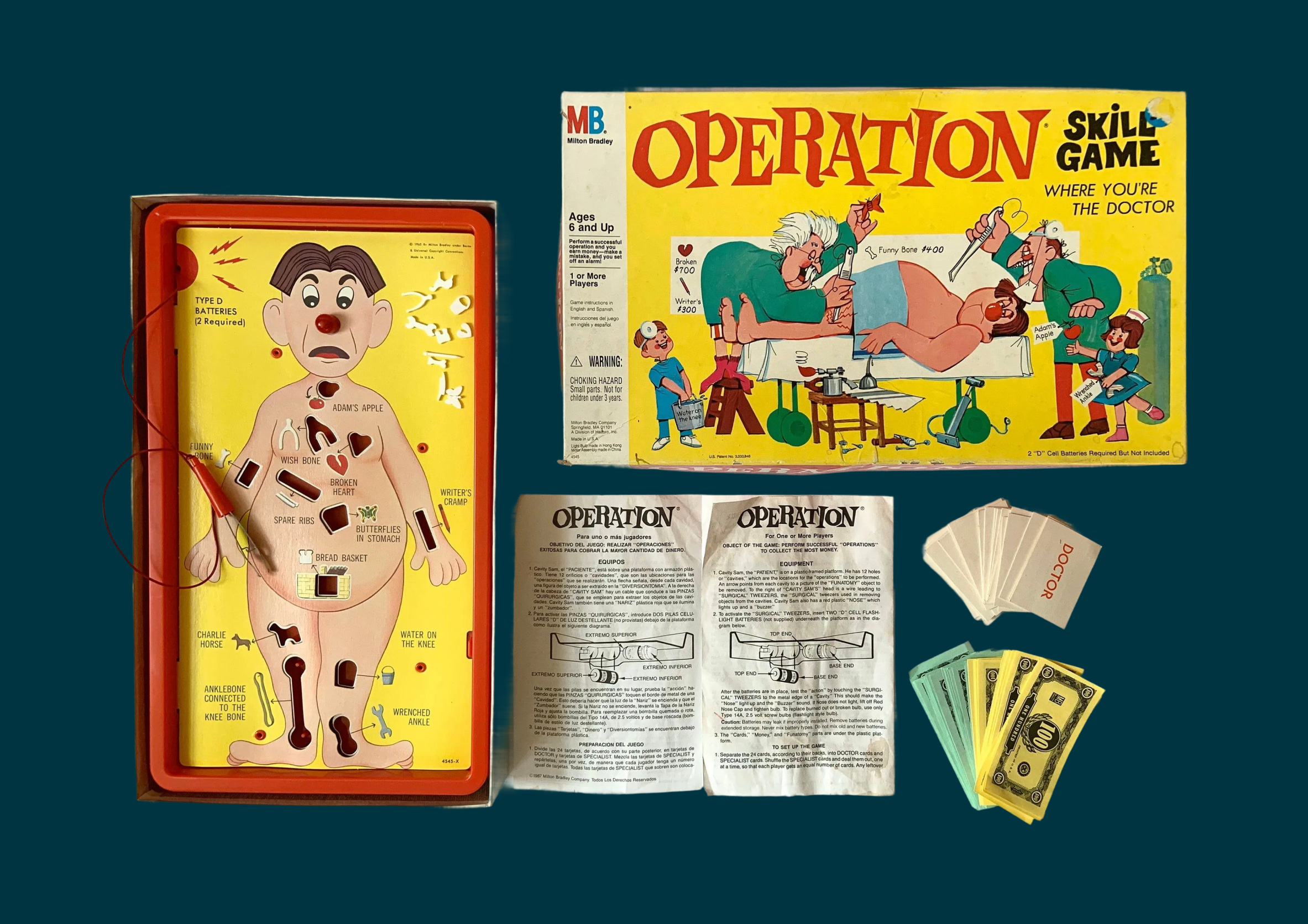
You, dear reader, are the surgeon. The article is the patient, the ontological categories are the organs, and the buzzer is reality screaming NOPE.
Your job is to remove each condition without collapsing a primary organ.
Recognizing baselines without tearing a hole in the fabric of the universe earns you points.
If the writer’s hand starts to shake and the tweezer begins to wobble, that’s the stage where the argument is technically still alive, but everyone in the room has started sweating.
You lose points when you fail to notice the writer setting off the buzzer—triggering a minor reality failure (and bone fracture). Nothing catastrophic, just widespread meaning loss.
And every time the argument says “therefore” with cascading confidence, and we forget to notice, we all bow solemnly to the universe and agree to step away from the table for awhile until we get back to baseline.
Scoring
✅ Clean move: +3
⚠️ Threshold wobble: +1
🚨 Limit (buzz): –3
💥 Cascading collapse: –5
🧠 Name the collapse? +2 with bragging rights
🎮 HOW TO PLAY
For each condition, ask yourself these questions:
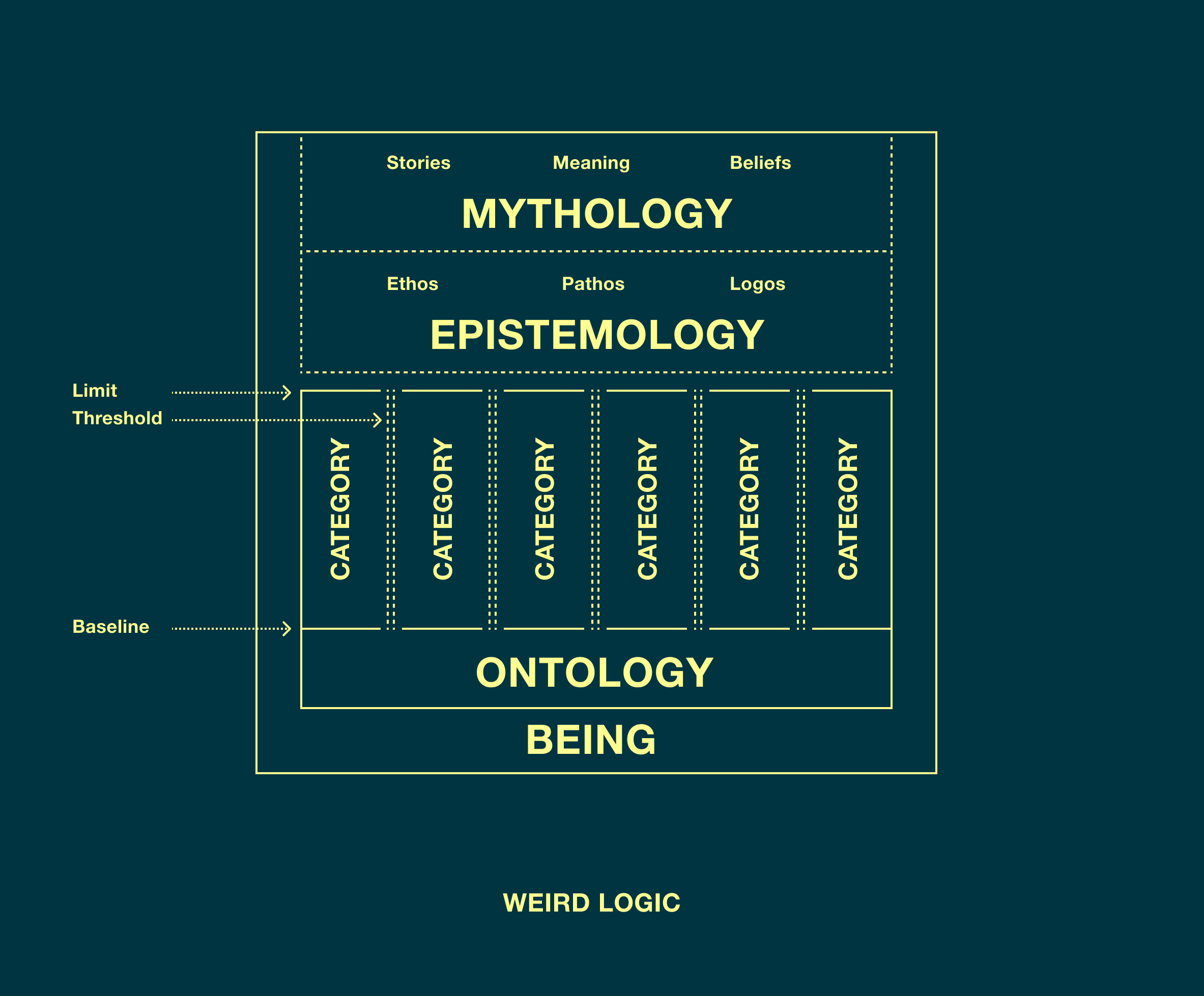
✅ What am I actually standing on, really? This is your baseline.
🐉 Mythology? (a story I like)
🧐 Epistemology? (how I know things)
🧱 Ontology? (what exists)
💫 Being? (the cosmic universe)Sort the claims. Does it shape-change into a bigger classification without showing the work?
That’s your threshold. Keep pushing and you’ll hit the limit. The board buzzes 💥, the red light flashes 🚨, and objective reality has collapsed. BZZZZT.
The patient has rolled into the operating room.
🦴 PHASE 1: “Funny Bone”
“So Massachusetts created the nation’s first Bureau of Statistics of Labor, hoping that data might accomplish what conscience could not. By measuring work hours, conditions, wages, and what economists now call “negative externalities” but were then called “children’s arms torn off,” policy makers figured they might be able to produce reasonably fair outcomes for everyone. Or, if you’re a bit more cynical, a sustainable level of exploitation. A few years later, with federal troops shooting at striking railroad workers and wealthy citizens funding private armories—leading indicators that things in your society aren’t going great—Congress decided that this idea might be worth trying at scale and created the Bureau of Labor Statistics.”
✅ BASELINE (Safe Removal)
So Massachusetts created the nation’s first Bureau of Statistics of Labor
You’re standing on Ontology. Sociology can be a quantified, incentive-based model of society. Candy Land for Type A’s.
If you got this right, give yourself +3 points
Sociological in nature.
⚠️ THRESHOLD (Wobble)
“federal troops shooting at striking railroad workers and wealthy citizens funding private armories—leading indicators that things in your society aren’t going great…”
Douglas Adams would have had an absolute field day with this soufflé of a sentence. Sooo…Mother Bureau doesn’t stir when a child loses an arm—that’s regrettable but manageable. But she springs into action when the china cabinet starts rattling and the heirlooms are suddenly within range of stray musket fire. Interesting priorities.
If you got this right, give yourself +1 point
Injustice is quietly downgraded from a moral failure to a systems malfunction.
🚨 LIMIT (BUZZER)
“Or, if you’re a bit more cynical, a sustainable level of exploitation.”
“leading indicators that things in your society aren’t going great”
Moral horror (Ethos) is survivable. Systemic unpredictability (Being) is not. The Vogons, naturally, prefer their exploitation properly documented.
If you got this wrong, subtract 3 points.
History slow claps for those who try to control gravity.
🦋 PHASE 2: “Butterflies in Stomach”
“These and thousands of other BLS statistics describe a society that has grown more prosperous, and a workforce endlessly adaptive to change. But like all statistical bodies, the BLS has its limits. It’s excellent at revealing what has happened and only moderately useful at telling us what’s about to. The data can’t foresee recessions or pandemics—or the arrival of a technology that might do to the workforce what an asteroid did to the dinosaurs.”
✅ BASELINE (Safe Removal)
“statistics describe a society”
You’re standing on Ontology and Epistemology. Social Trends are observable and knowable through statistics.
If you got this right, give yourself +3 points
Sociological in nature.
⚠️ THRESHOLD (Wobble)
“The data can’t foresee recessions or pandemics—or the arrival of a technology that might do to the workforce what an asteroid did to the dinosaurs.”
That’s a category jump from Trend to Rupture. Tomorrow is expected to sit, stay, and resemble yesterday. When it doesn’t, the Vogons begin inventorying the biscuits.
If you got this right, give yourself +1 point
The model leaves very little wiggle room for gravity’s tricks.
🚨 LIMIT (BUZZER)
And there it is.
“It’s excellent at revealing what has happened and only moderately useful at telling us what’s about to.”
The model does what it’s meant to do. It measures yesterday and politely declines to read your future. But if AI is a rupture, and not trend, then yesterday’s data may be a charming but inadequate tool to imagine how one survives an asteroid event.
If you got this wrong, subtract 3 points.
The writer spends several paragraphs acknowledging the limits of prediction and then pivots into forecasting AI with the serene optimism of Karen from Mean Girls checking the sky.
🧠 PHASE 3: “Brain Freeze”
“In May 2025, Dario Amodei, the CEO of the AI company Anthropic, said that AI could drive unemployment up 10 to 20 percent in the next one to five years and “wipe out half of all entry-level white-collar jobs.” Jim Farley, the CEO of Ford, estimated that it would eliminate “literally half of all white-collar workers” in a decade. Sam Altman, the CEO of OpenAI, revealed that “my little group chat with my tech-CEO friends” has a bet about the inevitable date when a billion-dollar company is staffed by just one person. (The business side of this magazine, like some other publishers, has a corporate partnership with OpenAI.) Other companies, including Meta, Amazon, UnitedHealth, Walmart, JPMorgan Chase, and UPS, which have recently announced layoffs, have framed them more euphemistically in sunny reports to investors about the rise of “automation” and “head count trending down.” Taken together, these statements are extraordinary: the owners of capital warning workers that the ice beneath them is about to crack—while continuing to stomp on it.
It’s as if we’re watching two versions of the same scene. In one, the ice holds, because it always has. In the other, a lot of people go under. The difference becomes clear only when the surface finally gives way—at which point the range of available options will have considerably narrowed.”
✅ BASELINE (Safe Removal)
You’re standing on Epistemology observing the cultural Pattern of Rupture that is beginning to occur.
If you got this right, give yourself +3 points
Sociological in nature.
⚠️ THRESHOLD (Wobble)
“The difference becomes clear only when the surface finally gives way—at which point the range of available options will have considerably narrowed.”
First we quantify the cracks (Epistemology). Then we forecast the plunge (Being). What we do not do is ask what disruption is, metaphysically speaking. Apparently the ice exists primarily for economic modeling.
If you got this right, give yourself +1 point
The tool is out of range.
🚨 LIMIT (BUZZER)
There’s an implicit rule that if the ice cracks, everyone must immediately assume the fetal position and sink with decorum (a paradoxical fear-based Ontology). Job loss equals total existential liquidation because apparently water is a strictly non-buoyant medium in modern economic theory (flattening Ontology). The possibility that rupture might reorganize the ecosystem instead of canceling it is treated as dangerously whimsical (Being). The ice fractures and somewhere Peter Pan is asking whether anyone has considered this radical technique known as “paddling.”
BZZZZT ⚡🚨
A cascading collapse. Subtract 5 points if you got this wrong.
Because the model has very little wiggle room for Being’s tricks, the labor system seems convinced the boogeyman is not only real, but trending upward.
🔧 ORGAN 4: “Wrenched Ankle”
“Most of the economic papers trying to figure out the impact of AI on labor demand use the BLS’s Current Population Survey. “It’s the best available source,” McEntarfer said. “But the sample is pretty small. It’s only 60,000 households and hasn’t increased for 20 years. Response rates have declined.” An obvious first step toward figuring out what’s going on in our economy would be to expand the survey’s sample size and add a supplement on AI usage at work. That would involve some extra economists and a few million dollars—a tiny investment. But the BLS budget has been shrinking for decades.
The United States created the BLS because it believed the first duty of a democracy was to know what was happening to its people. If we’ve misplaced that belief—if we can’t bring ourselves to measure reality; if we can’t be bothered to count—then good luck with the machines.”
✅ BASELINE (Safe Removal)
You’re standing on the Ontological category of Democracy—what it is and how we measure success.
If you got this right, give yourself +3 points
Fun fact. A democracy, inconveniently, consists of actual humans.
🚨 LIMIT (BUZZER)
The writer assumes that if we measure reality clearly enough (tool overreach), democracy will rise to the occasion (Mythology). It’s a charming faith in illumination. But courage does not emerge from spreadsheets. Data can tell us where the ice is thinning, but it cannot teach us to skate or to build something better when it cracks. The thinking stops where the meaning begins—in the space where it is uncertain and the category has not yet been defined.
If you got this wrong, subtract 3 points
Data can warn you the water’s cold. Creativity decides whether you sink, swim, or host a regatta.
🧮 FINAL SCORE
+14 or higher:
🧙♂️ Ontological surgeon. Gravity thanks you for being so grounded.
+6 to 13:
🛠️ You hit the buzzer, but the patient is still metaphysically stable.
0 to +5:
😬 Total organ failure. Remarkable confidence throughout.
Below 0:
🚑 The board lit up. Maybe don’t explain reality for a bit.
Josh Tyrangiel writes like the designated adult who shows up early and brings extra pens. His instincts are gloriously by-the-book. Democracies function when they measure things. Expand the survey. Increase the sample size. Fund the Bureau. Count the workers. In his world, disruption is something you monitor with instruments, not something you mythologize under moonlight. Observe, assess, then file accordingly.
Vogon poetry.
If Peter Pan suggested a flight to Neverland, Tyrangiel would ask whether the altitude has been peer reviewed. But honestly in a room full of doom enthusiasts, it’s oddly comforting to know someone brought a ruler.